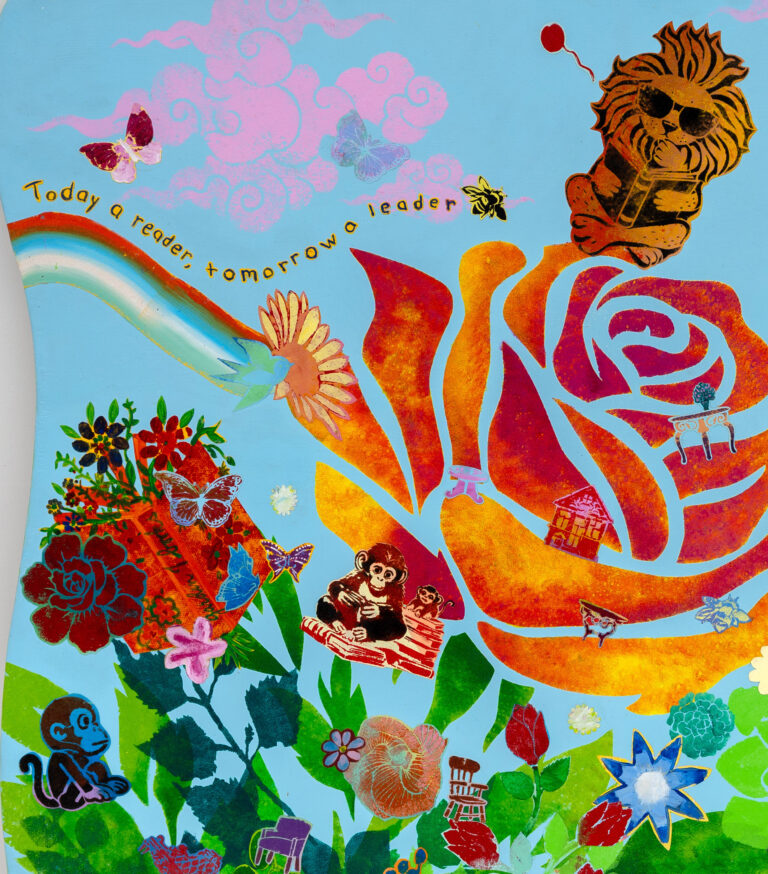
Every Book is a World You Can Walk Into, 2025, marouflage, 4 x 23' Location: Franklin Delano Roosevelt Elementary School
Every Book Is a World You Can Walk Into, mural
Collaborative Mural with Franklin Delano Roosevelt Elementary School Students, Lawndale, CA
Sponsored by ESMOA
When art enters a school, it does more than brighten a wall—it shifts what feels possible.
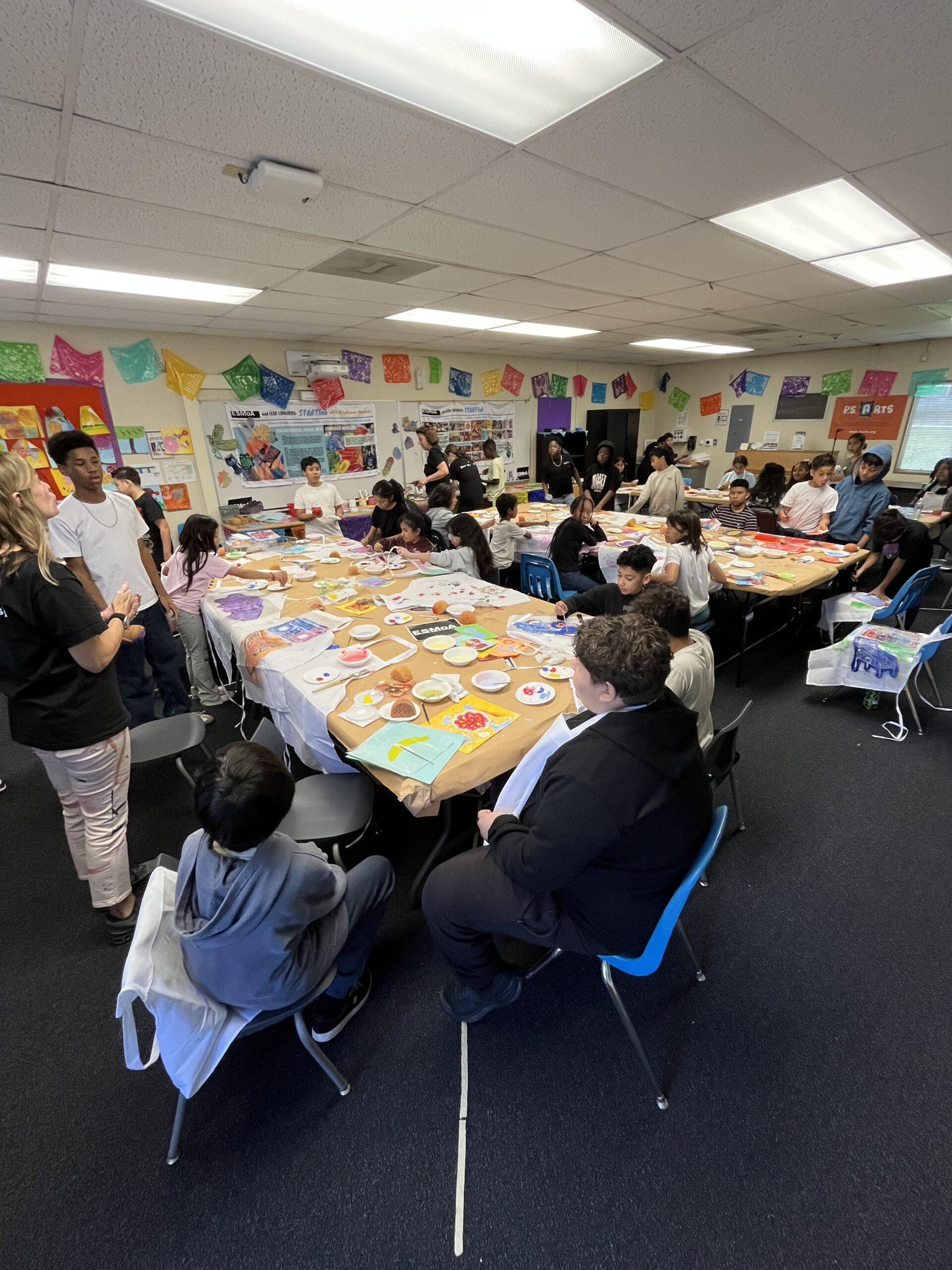
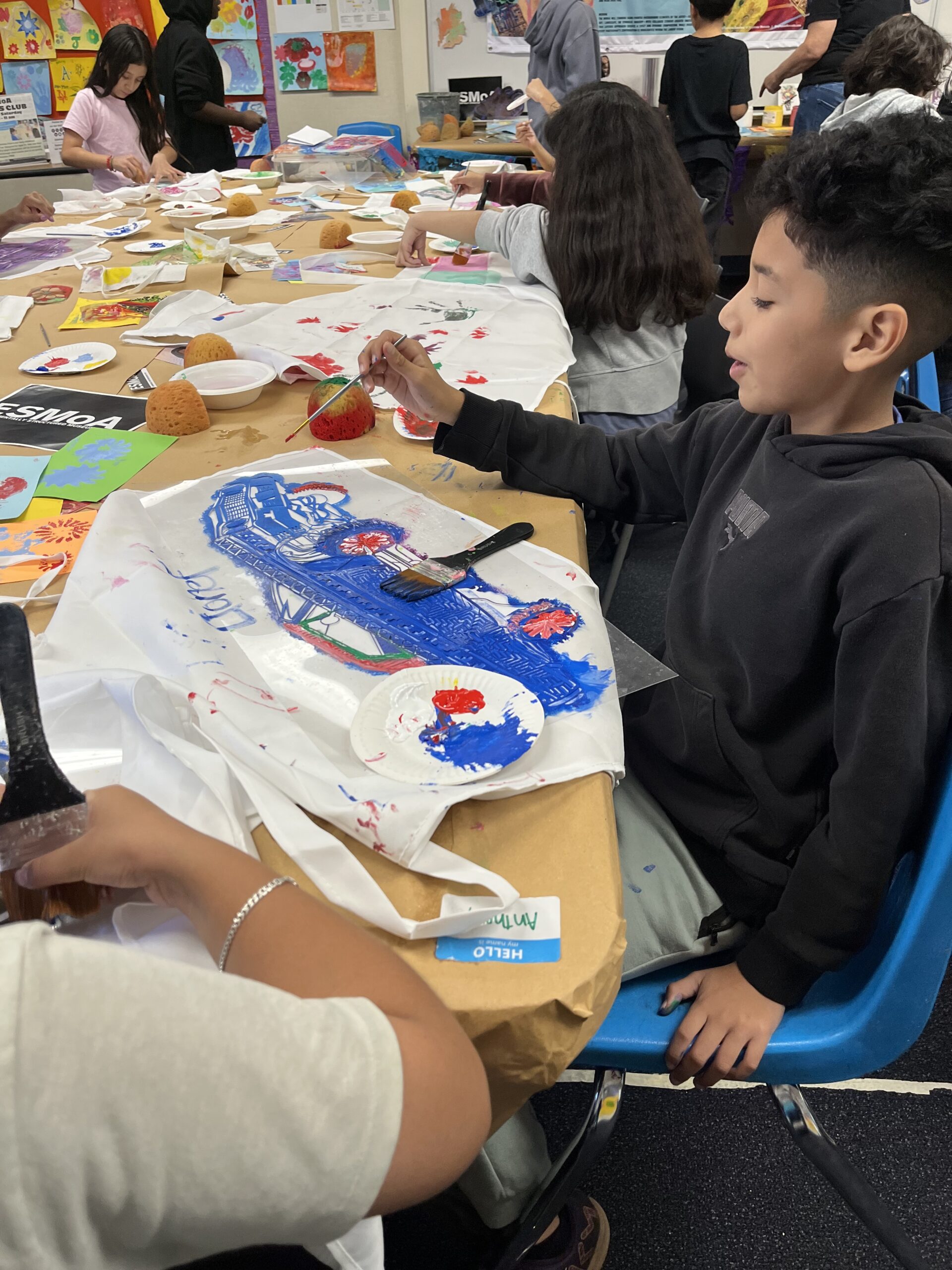
The Every Book Is a World You Can Walk Into mural was created in collaboration with nearly 70 fifth graders at Franklin Delano Roosevelt Elementary School in Lawndale. Over two, two-hour sessions, students worked on creating elements that will transform a 26-foot wall outside their library into a living landscape of imagination, growth, and self-discovery.
The project began with a simple but radical vision from the school’s principal: bring more art and green space to campus. Her dream is to build an outdoor garden beside the library—a place where children can read among plants, sunlight, and possibility. I was invited to paint flowers on the ground leading to the library entrance, creating a pathway that quite literally guides students toward stories. Just beyond that threshold, the mural stretches wide—a horizontal garden blooming across the wall.
Every Book Is a World You Can Walk Into (detail), 2025, marouflage on wood panel, 4 x 23'
Plants and florals have long been central to my practice. They are metaphors for becoming. For rooting. For blossoming into who we are meant to be. In a school community where resources can feel scarce, these symbols matter. They remind students that growth is natural, that brilliance can flourish anywhere, even in overlooked soil.
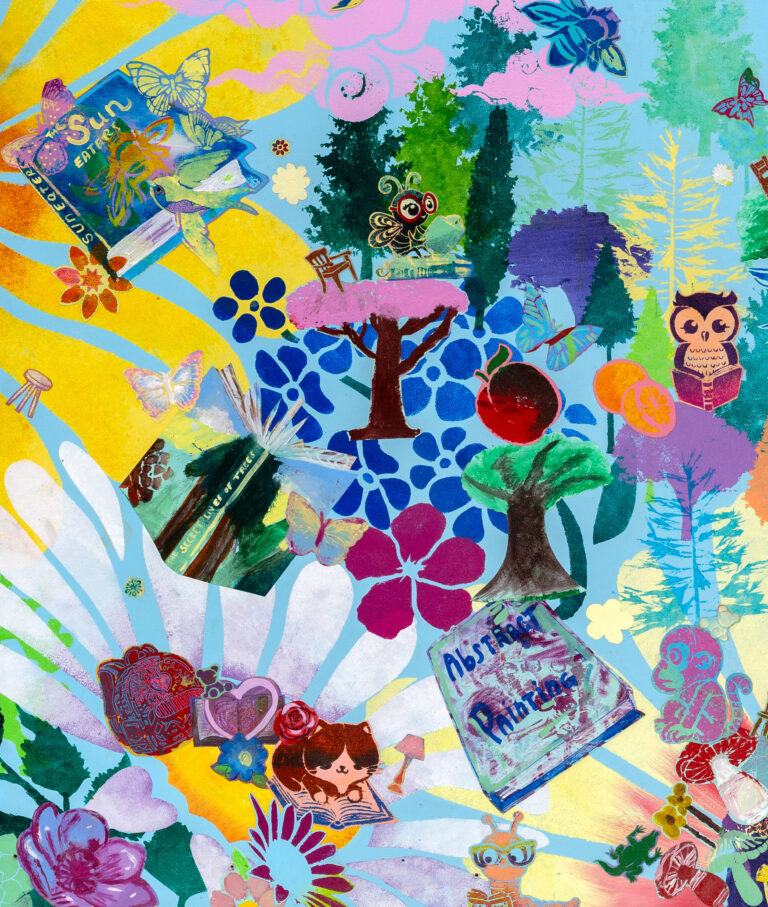
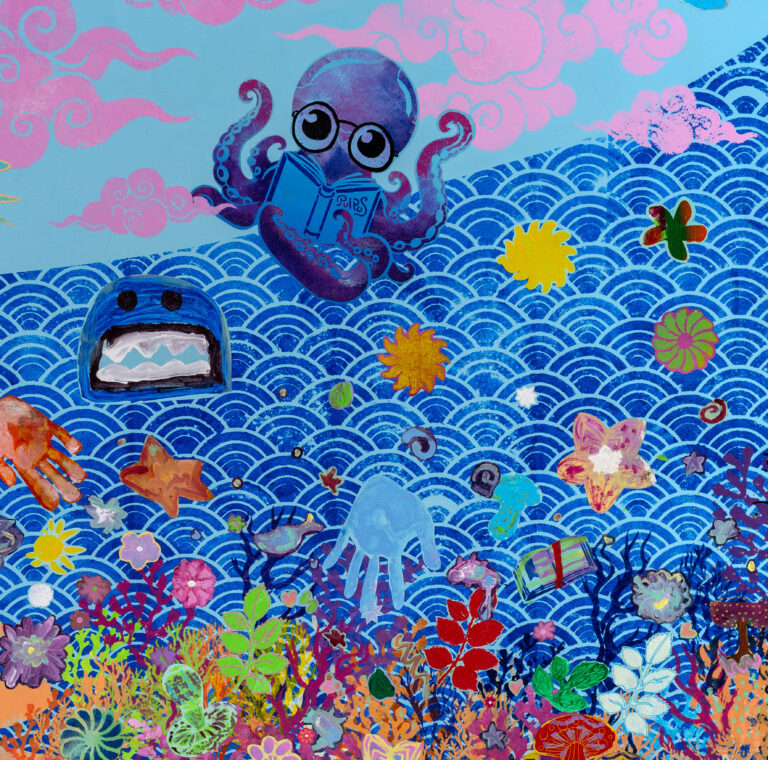
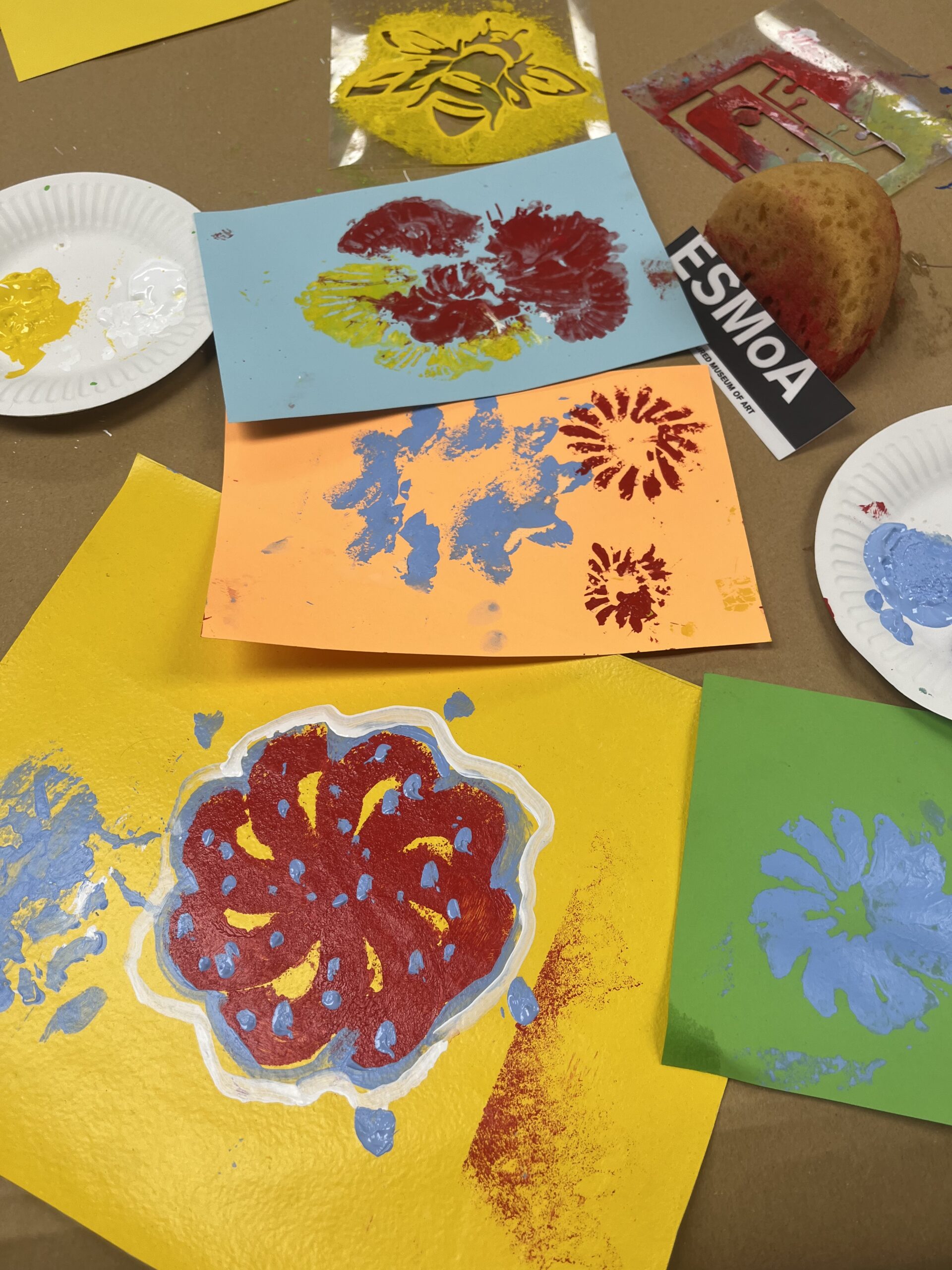
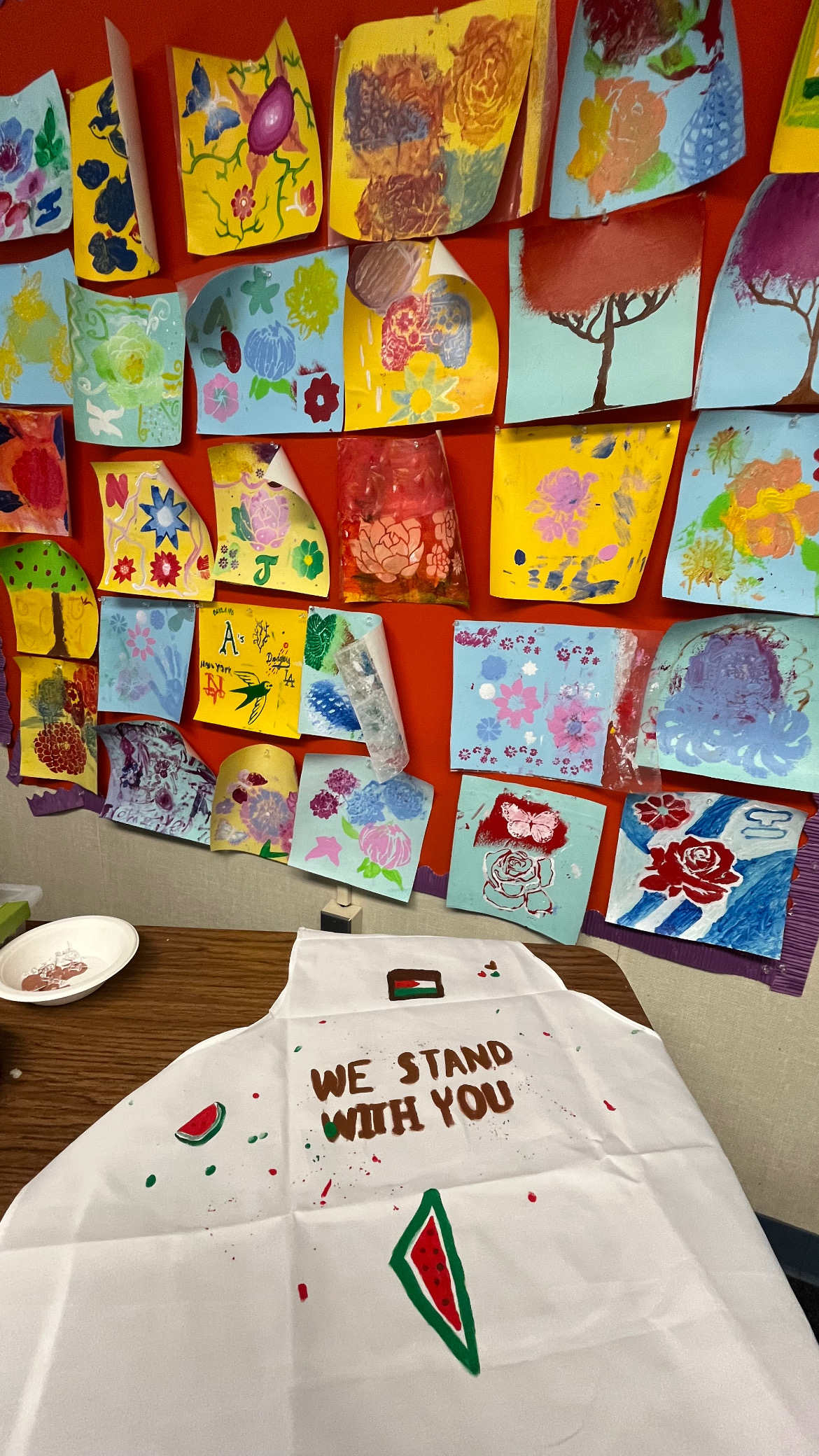
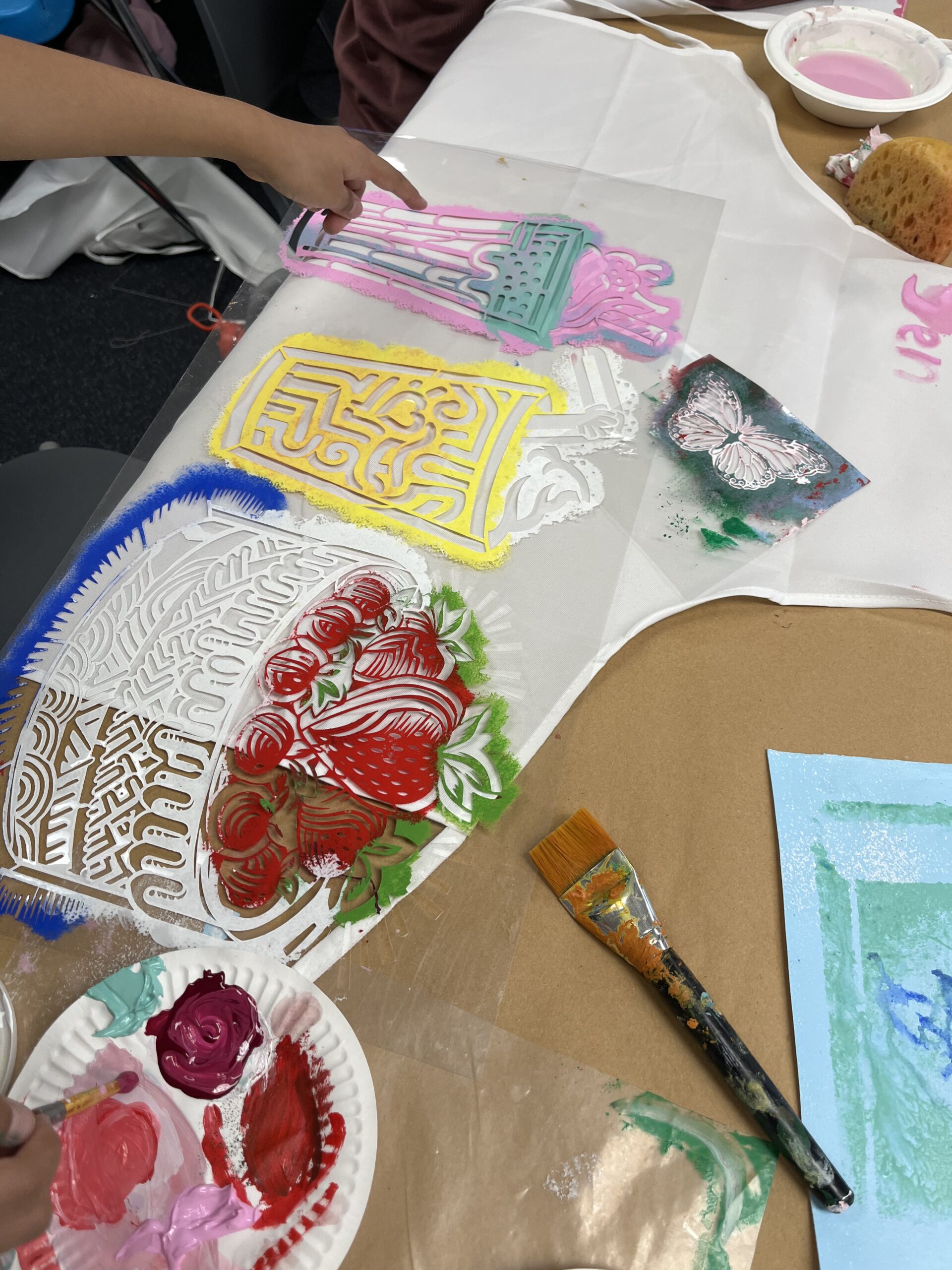
The mural itself is whimsical and alive. Animals and insects read books, discovering themselves and other worlds. Stories unfold not only on the painted wall but within the painted books. Many of those book covers were created by the students themselves. While I provided stencils as an option, many chose to paint freehand—abstract compositions, trees, handprints, sea creatures. One student’s loose abstract painting became a featured book cover in the mural, a testament to instinct and courage.
Every Book Is a World You Can Walk Into (detail), 2025, marouflage on wood panel, 4 x 23'
Plants and florals have long been central to my practice. They are metaphors for becoming. For rooting. For blossoming into who we are meant to be. In a school community where resources can feel scarce, these symbols matter. They remind students that growth is natural, that brilliance can flourish anywhere, even in overlooked soil.
The mural itself is whimsical and alive. Animals and insects read books, discovering themselves and other worlds. Stories unfold not only on the painted wall but within the painted books. Many of those book covers were created by the students themselves. While I provided stencils as an option, many chose to paint freehand—abstract compositions, trees, handprints, sea creatures. One student’s loose abstract painting became a featured book cover in the mural, a testament to instinct and courage.
Every Book Is a World You Can Walk Into (detail), 2025, marouflage on wood panel, 4 x 23'
Their creativity was not cautious. It was expansive.
This is why bringing art into underresourced communities is urgent. Literacy scores and test performance matter—but so does imagination. So does the feeling that your ideas belong on a wall. So does the experience of making something permanent in a world that often overlooks you.
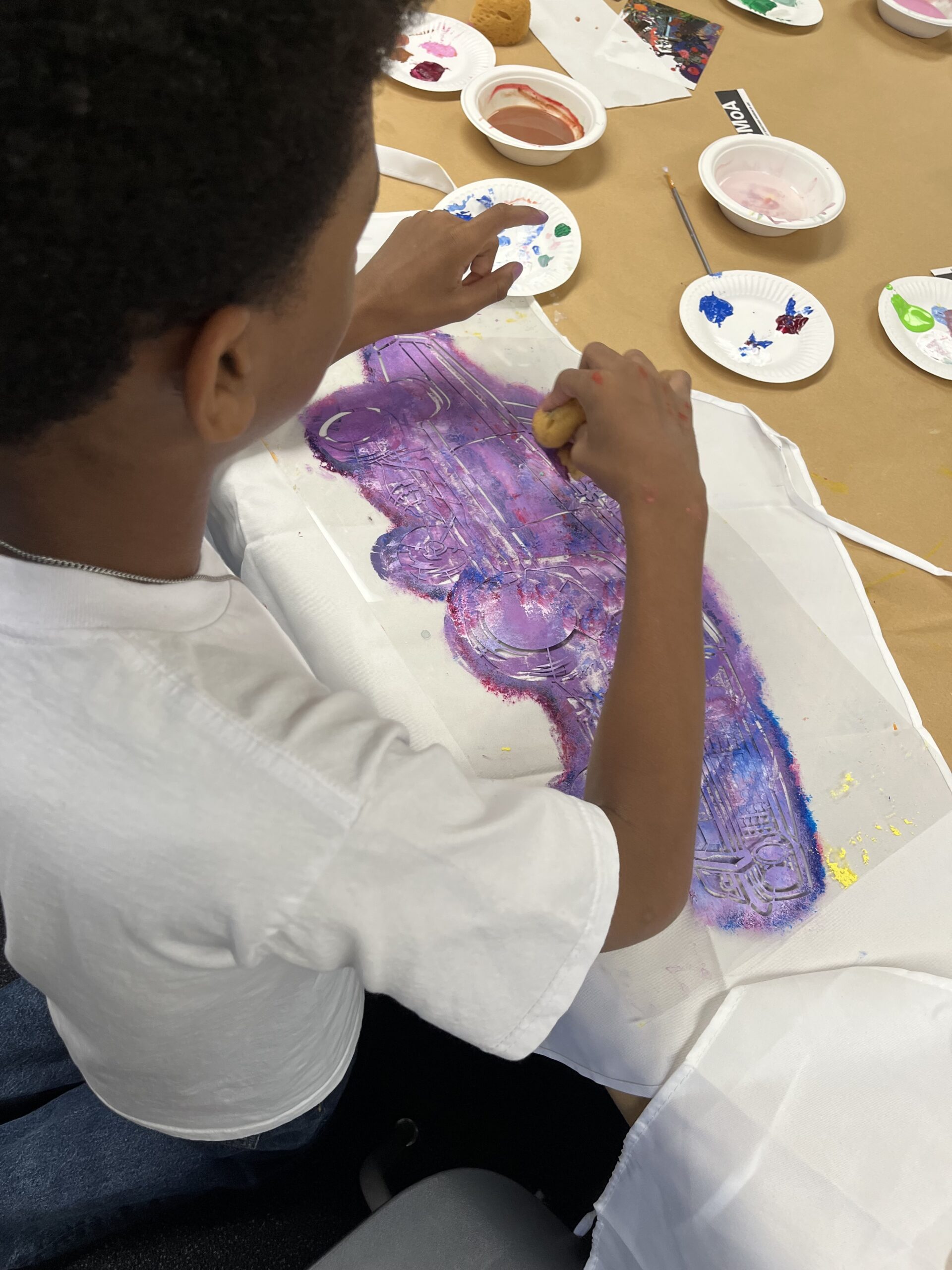
Throughout the workshops, the students were engaged, respectful, and deeply proud of their work. They were especially excited to learn that the paint-splattered aprons they wore were gifts—blank canvases they could personalize and take home. Some designed aprons for their parents. Others brought them back for future workshops, continuing their creative journeys with programs led by ESMOA.
Throughout the workshops, the students were engaged, respectful, and deeply proud of their work. They were especially excited to learn that the paint-splattered aprons they wore were gifts—blank canvases they could personalize and take home. Some designed aprons for their parents. Others brought them back for future workshops, continuing their creative journeys with programs led by ESMOA.
Access to art should not be a luxury. It should be foundational. When young people see themselves reflected in public space—when they are invited to author it—they begin to understand that their voices matter.
I am grateful to ESMOA for investing in this community and for actively expanding arts programming in local schools. Their commitment recognizes what so many educators already know: when we plant seeds of creativity, we are not decorating walls—we are cultivating futures.
And every book, like every child, holds a world waiting to be walked into.